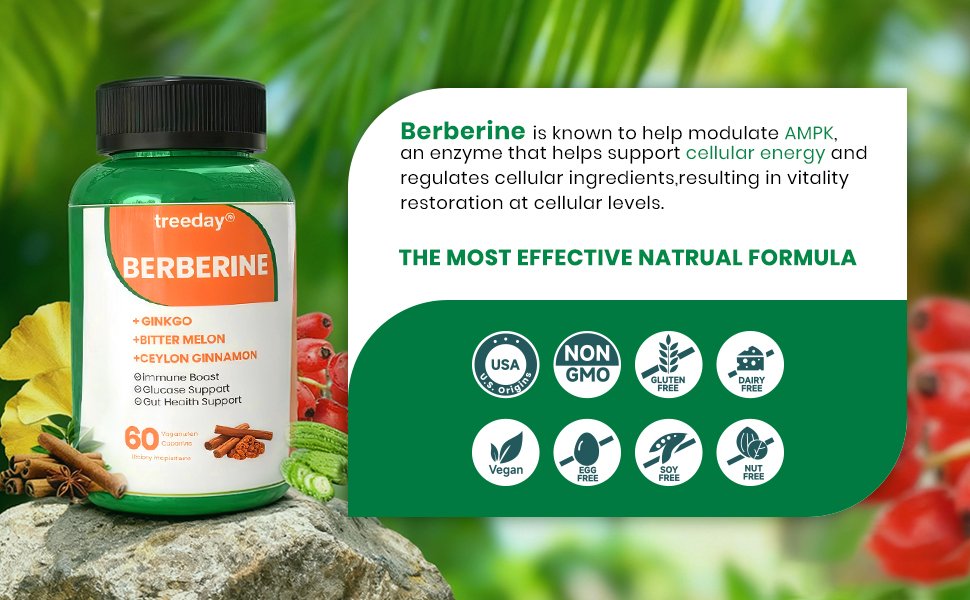
Berberine draws attention for one main reason—it helps manage cholesterol and triglycerides. Unlike many supplements that offer vague metabolic support, berberine has specific, measurable effects on your lipid profile. Research shows it lowers total cholesterolreduces LDL (the “bad” cholesterol), and brings down triglyceride levels. At the same time, it often gives HDL (the “good” cholesterol) a modest boost.How Berberine Lowers Cholesterol

How Berberine Lowers Cholesterol

Berberine tackles high cholesterol through a unique mechanism, and this sets it apart from prescription statins.

First, berberine increases LDL receptors on your liver cells. Think of these receptors as garbage collectors that sweep LDL particles out of your blood. More receptors mean faster cleanup and lower circulating cholesterol. Berberine achieves this by stabilizing the genetic instructions (mRNA) that tell your cells to build these receptors.

Second, berberine puts the brakes on a protein called PCSK9. This protein normally destroys LDL receptors and limits their lifespan. When berberine inhibits PCSK9, your LDL receptors stay active longer and clear more cholesterol from your system.

Third, berberine reduces how much cholesterol your intestines absorb from food. This triple action—more receptors, longer-lasting receptors, and less absorption—delivers a noticeable drop in LDL levels.

How Berberine Brings Down Triglycerides

Triglycerides often rise alongside cholesterol, and berberine addresses them directly through a different pathway. Berberine activates an enzyme called AMPK, which acts like a metabolic switch. When AMPK turns on, your liver stops producing excess fat and starts burning stored fat for fuel. This shift directly reduces the amount of triglycerides circulating in your blood.

Moreover, berberine works with your gut bacteria to enhance this effect. It encourages the growth of Akkermansia muciniphila, a beneficial microbe that helps convert cholesterol into bile acids. Your body then excretes these bile acids, pulling even more cholesterol out of the equation.

What the Numbers Look Like

The data on berberine and lipids is consistent and encouraging. A large meta-analysis that combined 41 randomized controlled trials with nearly 5,000 participants reported clear benefits. On average, berberine reduced:

  • Total cholesterol by 17 mg/dL
  • LDL cholesterol by 15 mg/dL
  • Triglycerides by nearly 19 mg/dL

Additionally, HDL cholesterol increased by about 2 mg/dL.

Another clinical trial gave participants 500 mg of berberine twice daily for two months. In this group, LDL cholesterol dropped by an impressive 23.8%. These numbers confirm that berberine provides real, measurable support for your lipid health.

How to Use Berberine for Lipid Support

Most effective doses range between 900 and 1,500 mg per day. Split this into two or three doses and take them with meals. Food improves absorption and minimizes any stomach discomfort.

Higher doses beyond 2,000 mg per day do not produce better lipid results. Instead, they may trigger digestive side effects without adding extra benefit for your cholesterol or triglycerides.

A Note on Safety and Interactions

Berberine carries a strong safety record, and clinical studies rarely report serious issues. Still, you should know that berberine interacts with the CYP3A4 enzyme, which metabolizes many prescription drugs. This includes certain statins and other common medications. Always talk to your doctor before combining berberine with any prescription treatment, especially if you already take lipid-lowering drugs.

The Bottom Line

Berberine offers a natural, evidence-based way to support healthier cholesterol and triglyceride levels. It works through multiple pathways—boosting LDL receptors, inhibiting PCSK9, activating AMPK, and partnering with gut bacteria. The result is a reliable reduction in total cholesterol, LDL, and triglycerides, plus a slight lift in HDL.

However, “natural” does not mean “take it without a second thought.” Berberine is a potent compound, and it can interact with common medications. It affects how your liver processes certain drugs, including some statins and blood pressure treatments.

Therefore, before you start taking berberine for cholesterol or triglycerides, speak with a qualified healthcare professional first. A doctor or pharmacist can review your current medications, check for potential interactions, and help you determine the right dose for your specific situation. This simple step ensures you get the lipid benefits of berberine while staying safe.

Combine that professional guidance with a balanced diet and regular movement, and berberine can become a valuable, well-informed part of your heart health strategy.

Leave a Reply

Your email address will not be published. Required fields are marked *